Pages

Showing posts with label history. Show all posts

Sunday, August 12, 2012

I climbed Kennesaw Mountain yesterday

UPDATE: OK, I went downstairs and added the pix. /UPDATE

Man, I need to exercise more.  The mountain is the site of a battle in the War Between the States, where Gen. Johnston's boys gave a whupping to Billy Sherman's Federals.  Not that it really helped them in the long run.

The hike (up Pidgeon Hill) is quite steep, and you go past the old trenches looking down from the crest of the hill.  No wonder the Boys in Blue got their tails handed to them, trying to charge up that slope against dug in defenders.  The whole attack was stupid.

Copyright Borepatch.  Click to enbiggen
These are the trenches dug by the Confederate Missouri regiment, which extend diagonally up to the right of the photo, as it parallels the crest of the hill.  These positions were attacked by the Union Missouri regiment is a very real example of fratricidal war.  The Missouri defenders gave a proper thrashing to their fellow statesmen, who had to charge up something like this:

Copyright Borepatch.  CLick to embiggen
That's looking down what's approximately a 45° slope over broken ground.  Like I said, the attack was stupid.  It's said that Sherman was angry at his Army for something or other, and intentionally sent them against these positions.  I don't know if this is true or not, but he was one cold hearted SOB and so this is plausible.

Now the alarums of those days are long past, and all you have is a quiet memorial trail, if you think on the dead of that battle.  Theirs is a quiet and beautiful memorial.


While I was hiking along the trail, I passed a your teenage couple - typical All American youth - playing chess.  It was an interesting riff on the expected Young Love theme, although that seemed to be there - I could hear her giggles as he moved his piece on the board.  The whole thing was quite unexpected, and made me smile.

Pictures later - the camera is downstairs, and I had quite enough climbing yesterday, thank you very much. [UPDATE: fixed now]

Maurice Greene - Lord, Let Me Know Mine End

Maurice Greene is little known today, which is unfortunate as it's his birthday.  More importantly, he is the father of Anglican church music.  Contemporary with Handel, he became essentially the Court Composer to King George.  His magnum opus, Cathedral Music was unfinished at his death, but completed by his student William Boyce.  Anyone who's spent much time in an Anglican Church (or Episcopal, I dare say) will recognize much of his music.

This is perhaps his best known piece, and seems appropriate for his birthday - his first day, as it were.

Thursday, August 9, 2012

Nagasaki

Reader Dave emails in response to my post about why we dropped the atomic bomb on Hiroshima.  It's something to think about on this 67th anniversary of the second atomic bomb.  Reprinted with his permission:
I highly recommend D.M. Giangreco's Hell to Pay: Operation Downfall and the Invasion of Japan, 1945 - 1947. BLUF: any invasion would have been bloody, extremely bloody, costing hundreds of thousands (some estimates ran as high as a million) American dead and perhaps ten times as many Japanese.

I also highly recommend Rev. Wilson Miscamble's The Most Controversial Decision: Truman, the Atomic Bombs and the Defeat of Japan.  Rev. Miscamble also calls attention to the additional lives saved in Japanese occupied Asia, where tens of thousands more were being killed every month the war continued.
The truth is more nuanced than we're told, even by people who claim to value nuance.

Monday, August 6, 2012

Blow it out your ears, Atomic protesters

Today is the 67th anniversary of the first use of atomic weapons.  The day will no doubt be commemorated by the Usual Suspects - those motivated by modern politics rather than sympathy for the souls of the dead*.

We will no doubt hear how this a a barbaric, despicable act, one that was entirely unjustified.  Those who say this will probably not have heard of anything that I relate in this post.  In short, it is the empty noise of ignorance that sees in itself wisdom.  They don't know that there was a moral justification, and a practical one.

The Moral Justification for dropping the bomb

There are people who think that justice requires a response, that karma will be balanced in this world or the next, and that crime and punishment cannot be separated.  We frequdntly hear this from those who seek to establish the guilt of this Republic with charges of crimes committed long ago.  And so the bill of indictment for the Imperial Japanese regime in August 1945 runs like this:

The Bataan Death March

The Rape of Nanking


The Manilla Massacre

Forced Prostitution

Experiments on Humans

This is an abbreviated list, but to those who claim that this current Republic is guilty of past crimes, and that those past crimes demand justice, this list is entirely sufficient to strike the Atomic Bombs from the moral case against us.  Using internally consistent logic, of course, which is not often seen when debating such people.  But the moral case is indeed present and accounted for.

The Practical Justification for dropping the bomb

On November 20, 1943, United States Marines hit the beach on Tarawa atoll, facing 3,600 Japanese and 1,200 (possibly forced) Korean laborers.  Three days later, only 17 Japanese soldiers and 129 laborers were alive; the others had fought to the death.  1,000 Marines died, and another 2,000 were wounded.

On June 15, 1944, the US Marines moved closer to the Japanese home islands, invading the island of Saipan.  This island would finally put the Japanese home islands within the range of the B-29 bombers, and was defended by nearly 30,000 Japanese.  All but 900 of them died, 5,000 of who were civilians who killed themselves rather than be captured by the American Devils.  3,400 Marines died, and over 10,000 were wounded.

On September 15, 1944, US Marines stormed the beaches of Peleliu.  Of the nearly 11,000 Japanese defenders, all but 200 fought to the death.  1,200 Marines died, and over 5,000 were wounded.

On February 19, 1945, the Marines landed on Iwo Jima's back sand beaches.  Iwo was the only battle in the entire war where America suffered more casualties than did Japan.  27 Americans were awarded the Medal of Honor here, more than any other battle in history.  Of the 22,000 Japanese defenders, only 200 survived the battle; a large number of these committed suicide, although a few hid out in the tunnels until finally captured.  The last of these was captured in 1951.  America lost almost 7,000 dead and nearly 20,000 wounded.

On April 1, 1945, American forces finally touched Japanese soil, in Okinawa, an outlying island.  Not quite 100,000 Japanese combatants and civilians died or committed suicide; only 10,000 survived.  America suffered over 12,000 dead and nearly 40,000 wounded.

This was the situation in the summer of 1945.  Each battle that got closer to Japanese soil became more costly for both America and Japan.  Japanese defenders were fanatically dangerous, mostly choosing to die to the man if it gave them a chance to bleed the American forces.  Looking at an invasion not of isolated atolls but of Japan itself, President Truman asked for an estimate of casualties in the planned Operation Olympic to seize Kyushu and the subsequent Operation Coronet for the remainder of Japan.

The Joint Chiefs told him that based on what had been seen in Tarawa, Saipan, Peleliu, Iwo Jima, and Okinawa, that he could expect American casualties to be in the millions.  The lowest estimate was 1.2 Million casualties, the highest was 4 million - including 800,000 dead.

Japanese casualties were not well estimated, but were assumed to be ten times the American figure.  Half a million Purple Heart medals were ordered, so many that we have not manufactured any since; the United States still has around 100,000 of these in stock.

It is entirely plausible that none of the protesters you might encounter today will have the slightest idea about this: that two thirds of a century of American wars have not depleted the medals ordered for a portion of the invasion of Japan.

The wonder is not the Truman ordered the bombs dropped, the wonder is that he waited as long as he did.  And that was the right decision.  Millions survived the war because of it.  People who do not know this, or who choose to ignore this are frivolous.

* Think I exaggerate?  Where were these people on March 9?

UPDATE 7 August 2012 10:01: Not just lefties, it seems.  Libertarians, too.

Sunday, August 5, 2012

All aboard!

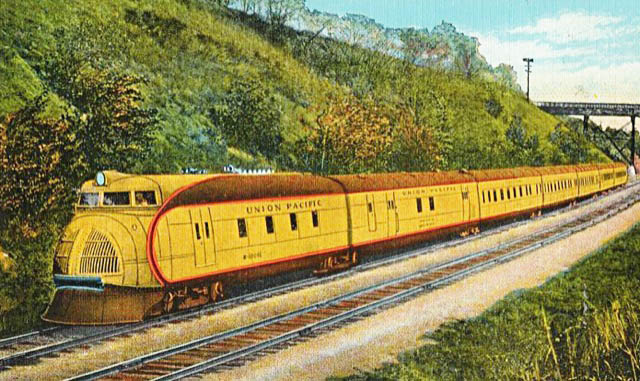
Railroad buffs will want to check out Streamliner Memories, a new blog about the great age of railroading.


Reading some of these posts, it's easy to see how railroads got replaced by air and auto: when it takes almost 60 hours to cross the country, reducing that by 90% becomes a big win.

But nobody will ever be nostalgic for the days of the flying bus, TSA, and surly flight attendants.  Take be right back to 32F, Jack!


Playing the Neanderthal Bone Flute Music

Image via Wikipedia
The Divje Babe flute is said to be the oldest musical instrument we know of, although this is somewhat controversial.  I guess that it's not surprising that there's rather a lot of uncertainty regarding Neanderthal artifacts.

The flute is thought to have been fashioned from the femur or a cave bear.  The bone was clearly fashioned by man - no other animal leaves this sort of mark.  It took skill to put these holes in the bone without splitting it.  There is considerable speculation and controversy over the spacing of the holes, and whether it fits any recognizable musical scale.

To me, the speculation is, well, speculation.  The proof of the pudding is in the eating, after all, and the proof of the flute is in the playing.  The music here is modern, of course - the Neanderthals left no known musical inscriptions.  This recording is not the Divje Babe flute itself which is safely ensconced in a museum in Ljubljana, Slovenia/

But it is music played on a reconstruction of the flute, and it sure does sound like a flute.  What ancient man played for music, and whether this was religious or for pleasure, whether it accompanied ancient tales told around the fire - alas, no reconstruction can ever tell.